
This post aims to provide an in-depth exploration of the 48V Bosch Mobility power system commonly found in various small electric vehicles. Essentially, this system is based around a Bosch BSG (Belt-driven Starter Generator), a component widely used in 48V mild-hybrid petrol and diesel applications to improve efficiency and reduce emissions. The Bosch BSG is a versatile and compact device that combines functions such as engine start-stop, regenerative braking, and support for mild hybrid systems, making it an integral part of modern automotive and micro-mobility solutions.
My interest in this system was sparked by a project to develop a reliable propulsion setup for a river boat. During my search for suitable components, I came across a non-running Govecs Cargo (also sold as a Schwalbe) for sale at a remarkably low price. Although I was initially unfamiliar with this particular model, I noticed it featured belt drive rather than the more common hub motors, and it was equipped with two sizable lithium battery packs. These features piqued my curiosity, prompting me to investigate further.
Despite the increasing popularity of electric motorbikes and small electric vehicles, detailed information about the specific Bosch mobility systems used in these bikes remains somewhat scarce online. What I did discover is that Govecs is a German-based company headquartered in Munich, with manufacturing facilities in Poland. They produce a range of small electric vehicles—primarily electric scooters and cargo bikes—that are predominantly powered by Bosch Mobility power systems. However, comprehensive technical details about these systems are limited, which adds an element of intrigue and challenge to understanding their full capabilities.
In this post, I will delve into the specifics of the Bosch 48V mobility system, its components, and how it integrates into vehicles like the Govecs Pro Cargo. I will also share insights from my hands-on experience with the vehicle, including the process of diagnosing its non-runner status, the potential of the belt-driven architecture, and how these systems could be repurposed or integrated into other projects such as my river boat propulsion setup. Through this exploration, I hope to shed light on the practical applications and limitations of these compact yet sophisticated power systems in micro-mobility and beyond.
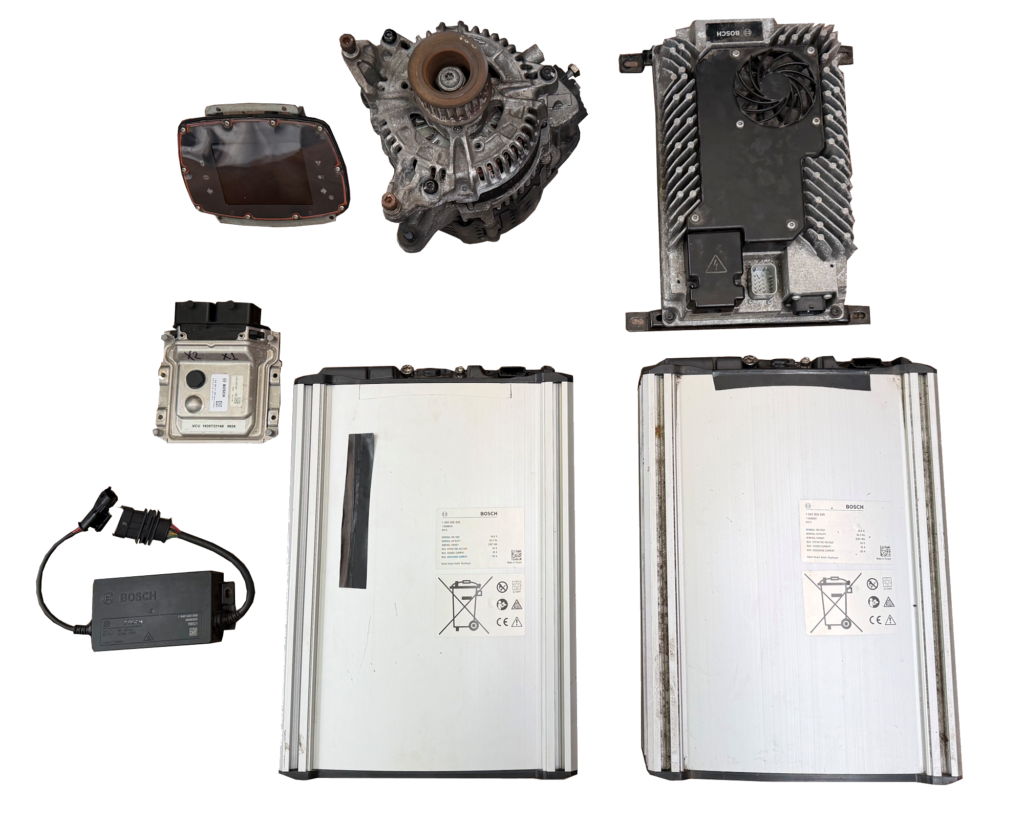
The power system consists of the following:
- LCD Display
- Bosch 48v BSG (hybrid alternator)
- Bosch 48v mains charger (possibly a re-branded Delta-Q unit)
- Bosch VCU (vehicle control unit)
- Bosch DC-DC converter (to keep the 12v system charged).
- Bosch 48v Lithium battery pack(s)
Diagnosing the fault(s)
The bike successfully powered up on the 12-volt system, However, the orange fault indicator light was illuminated on the display panel, signalling that a system fault had been detected. This fault prevented the rider from engaging the drive mode, effectively disabling the bike’s motor for safety reasons.
These bikes are compatible with theBosch uDrive Android application, which allows users to perform various functions such as diagnostics, system checks, and customization. Unfortunately, the uDrive app is no longer available for download from the Google Play Store, making access more challenging for current users. However, it can still be obtained through alternative sources like ApkPure, where it remains accessible for download and installation.
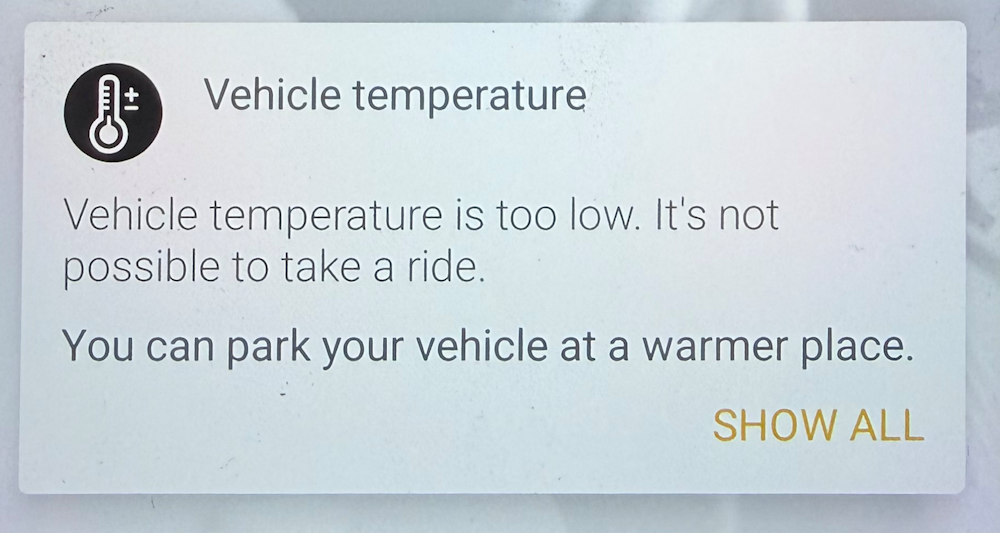
The uDrive app features a diagnostics tool that can help identify and interpret system faults. In this particular case, the fault was “Vehicle temperature is too low. It’s not possible to take a ride. You can park your vehicle at a warmer place” which is related to a safety lockout mechanism that activates under certain conditions to prevent potential damage or unsafe operation. The system had triggered this lockout due to a temperature-related safety feature, which is designed to protect the battery and electrical components from overheating or operating outside safe temperature ranges. Interestingly, the fault was logged despite the ambient temperature being approximately 22°C at the time, which is well within normal operating conditions. This discrepancy suggests that the temperature sensors or the logic controlling this safety feature may have been malfunctioning or misreading environmental data, leading to an unnecessary safety lockout. Further inspection and diagnostics would be required to pinpoint the exact cause or failure.
At this point I’m stuck but I will update this post when I find out more!